If you have ever wondered what the Bikrami Calendar is and why millions of people in Punjab, Pakistan, and India follow it, you are in the right place. The Bikrami calendar is one of the oldest and most important calendars in South Asia. It guides everything from farming and weddings to religious festivals and daily life decisions.
In this complete guide, we will explain the Bikrami Calendar in simple English, tell you about all 12 Desi months, and show you how it compares to the modern Gregorian calendar you use every day.
What is the Bikrami calendar?
The Bikrami Calendar, also known as the Vikrami Samvat or Punjabi Calendar, is a lunisolar calendar. This means it follows both the sun and the moon to calculate dates. It was introduced around 57 BCE and has been used by Punjabi Muslims, Hindus, and Sikhs for centuries.
The calendar gets its name from the legendary king Vikramaditya, who is credited with starting this calendar system. Today, it is the primary traditional calendar used in Punjab, both in Pakistan and India.
Why is the Bikrami calendar important?
- Farmers use it to decide when to plant and harvest crops
- Families use it to pick auspicious wedding dates
- Sikhs and Hindus use it to celebrate festivals like Baisakhi, Lohri, and Diwali
- Punjabi Muslims use it alongside the Islamic Hijri calendar
- Village communities use it for melas, cultural events, and religious observances
All 12 Desi Months of the Bikrami Calendar
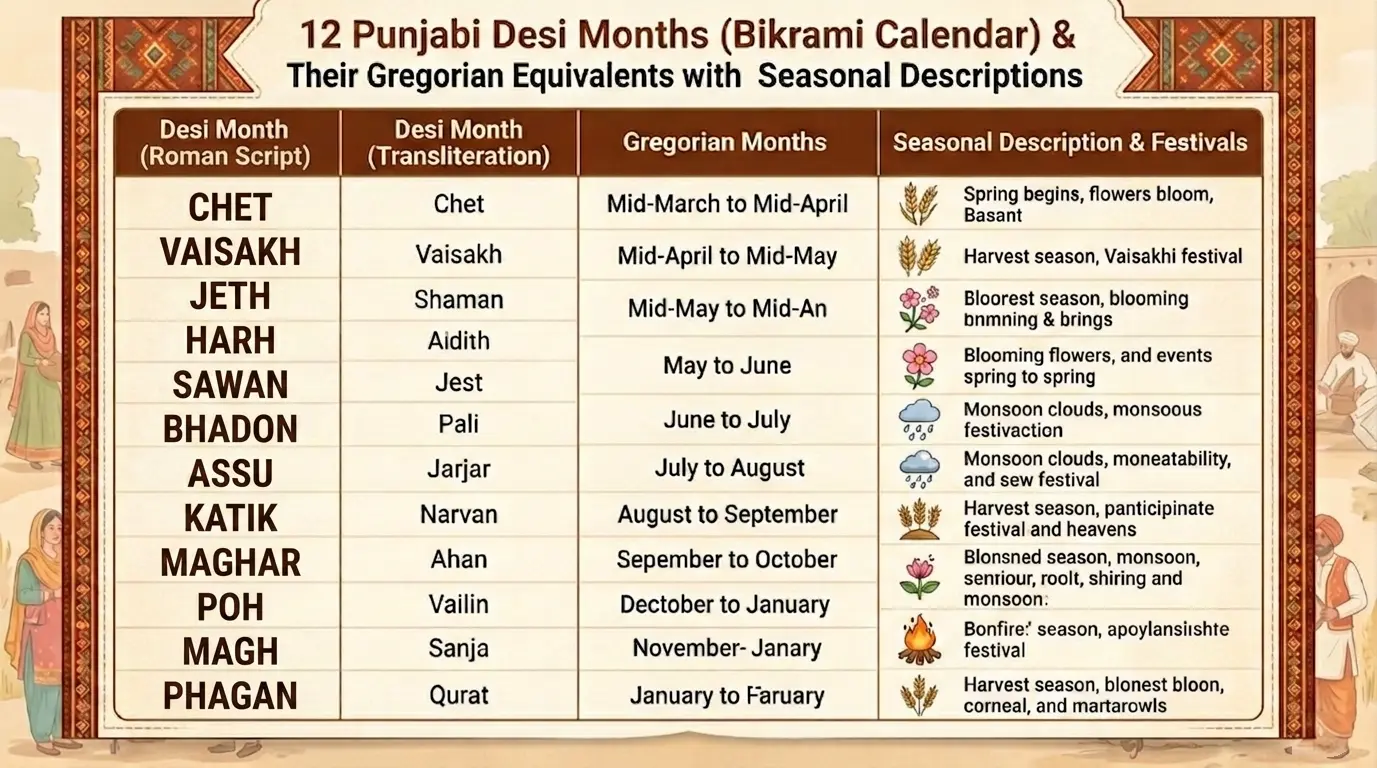
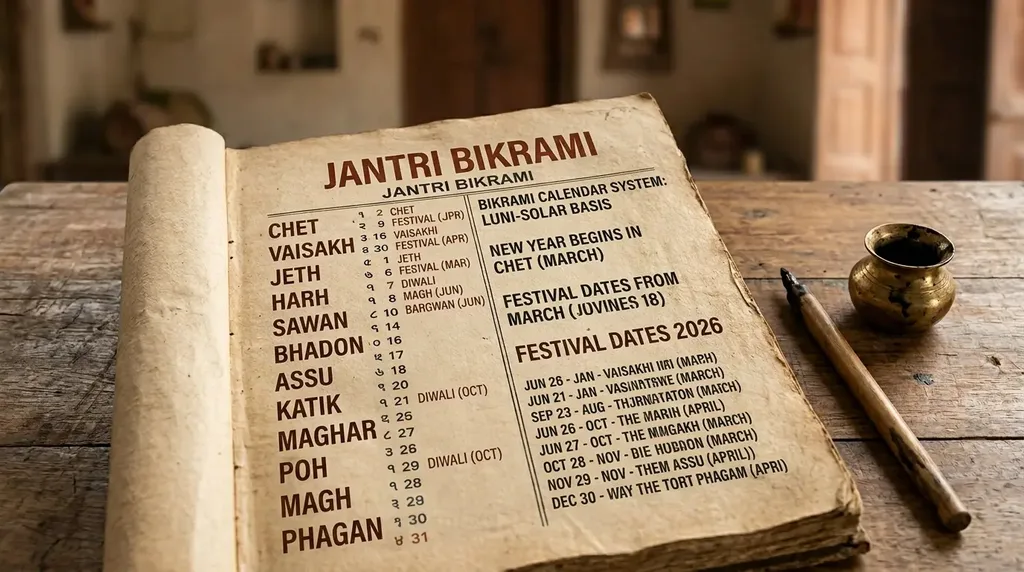
Here are all 12 Punjabi Desi months in order:
- Chet (March – April): First month, arrival of spring, farmers prepare fields
- Vaisakh (April – May): Baisakhi festival; wheat harvest begins
- Jeth (May – June): Hot summer month, mango season starts
- Harh (June – July): Monsoon arrives, rice sowing begins
- Sawan (July – August): Peak monsoon, famous for songs and romance
- Bhadon (August – September): Rainy season continues, Teej festival
- Assu (September – October): Autumn begins, Dussehra and Navratri
- Katak (October – November): Diwali and Gurpurab of Guru Nanak Dev Ji
- Maghar (November – December): Winter arrives, cool weather
- Poh (December – January): Coldest month, Lohri celebrations
- Magh (January – February): Maghi festival, harvest of sugarcane
- Phagan (February – March): Last month of year, Holi festival
Bikrami Calendar vs Gregorian Calendar: Key Differences
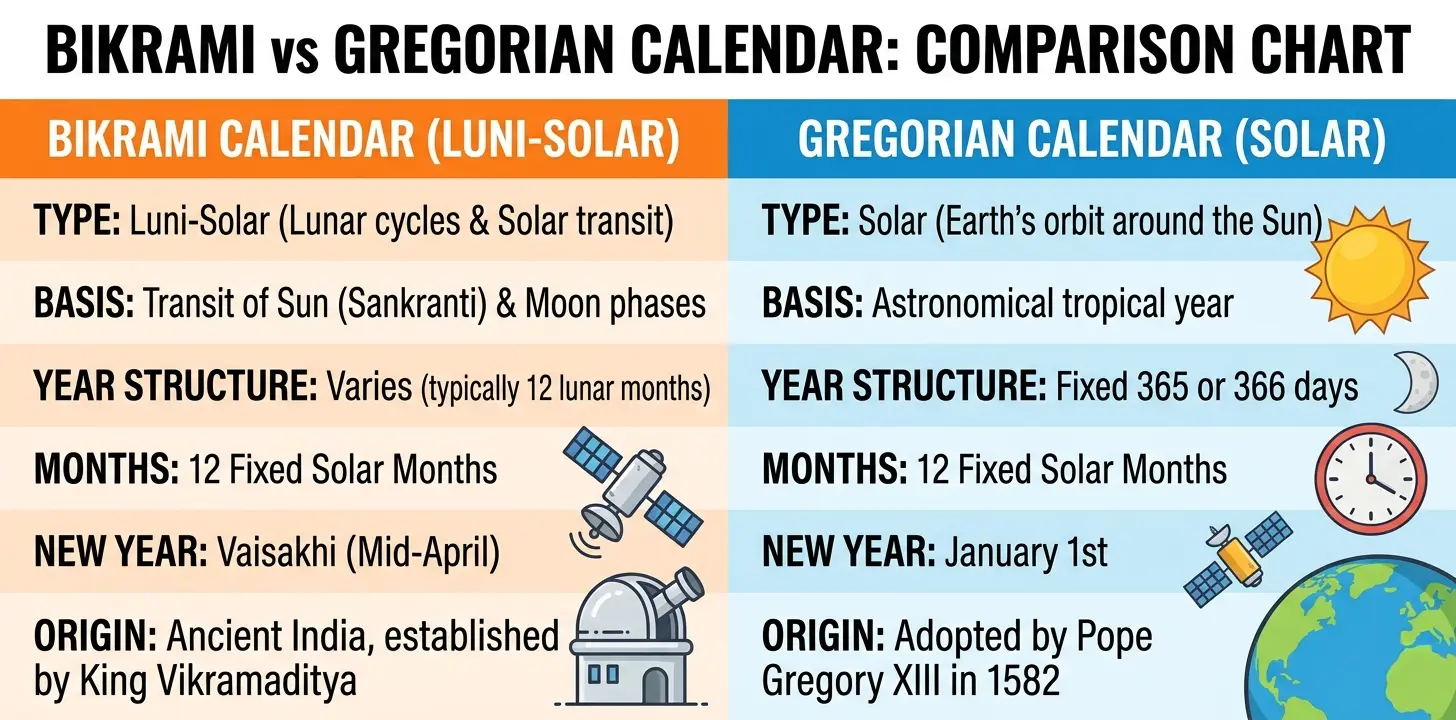
The main difference between the Bikrami calendar and the Gregorian calendar is that the Bikrami calendar is lunisolar while the Gregorian is purely solar. This means Desi month dates shift slightly each year compared to English dates.
The Bikrami year 2082 corresponds to the Gregorian year 2025-2026. The Bikrami New Year starts with Vaisakh, not January.
How to Find Today’s Desi Date
You can check today’s Desi date, Bikrami date, and Nanakshahi date anytime on desimonthdate.site. We update it every day so you always have the correct Punjabi calendar date.
Check Today’s Desi Date → https://desimonthdate.site/
All Sangrand Dates 2026 → https://desimonthdate.site/sangrand-dates-2026/
Bikrami vs Nanakshahi Calendar → https://desimonthdate.site/bikrami-vs-nanakshahi-calendar/
Conclusion
The Bikrami Calendar is more than just a way to track time. It is a living connection to Punjabi culture, agriculture, and spiritual life. Whether you are planning a wedding, celebrating a festival, or simply want to know today’s Desi date, the Bikrami Calendar has guided Punjabi families for over 2,000 years.
Bookmark desimonthdate.site to check today’s Desi date anytime!
2 thoughts on “What is the Bikrami calendar? Complete Guide 2026 | Desi Month Date”